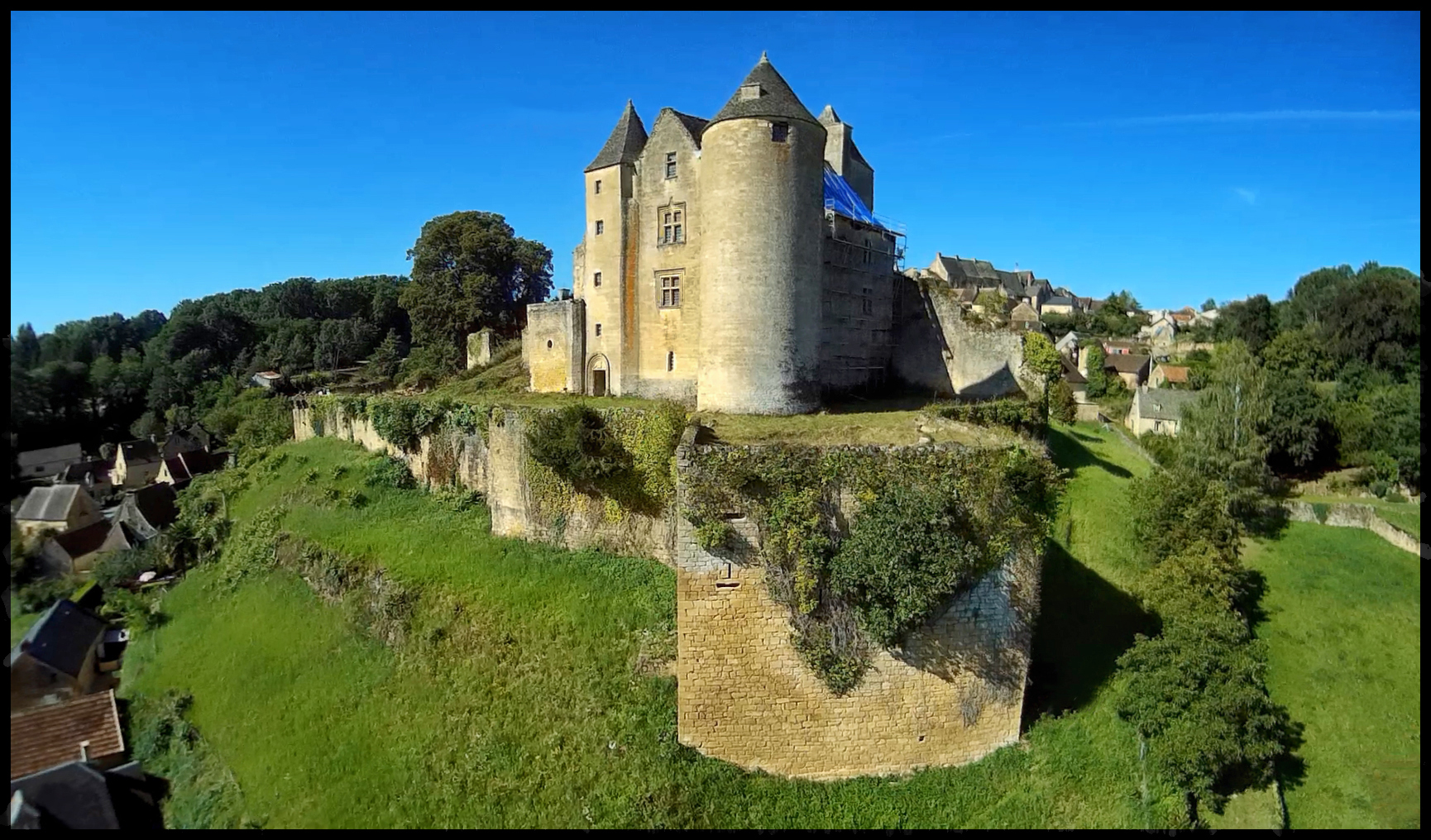
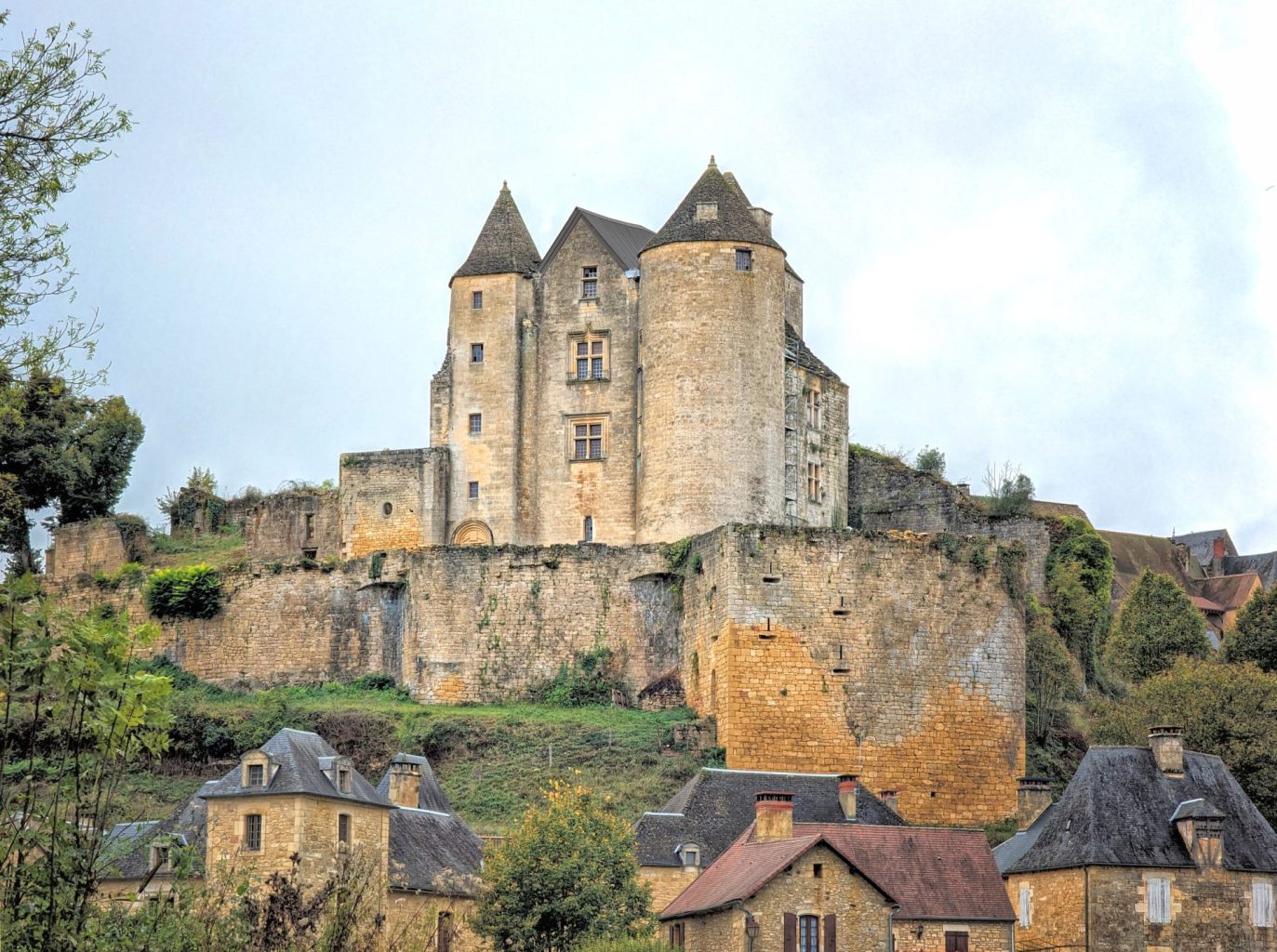
In the Périgord Noir, 15 km from Sarlat, there is a castle to visit that is unlike any other in the Dordogne...
Live the History


Abandoned, bruised by the history and forgotten, in 2006, the castle was bought by its current owners.
Fell in love with the place, the family launches, body and soul in the rescue of the monument.
And the needs are enormous. The roof was slate, weighs extremely heavy on the frame which is in danger of collapse. A beam of 40 cm section has even given way under the weight. The floors are to change. Modern amenities (electricity and heating) have left deep scars in the structures of the castle.
Defensive structures are not leftovers with damage important due to the vegetation, which enjoys a microclimate ideal for development : a source feeds the whole site in water, and the old stones of the castle accumulate heat during the day and redistributed when it's cold. The castle is invaded by ailantes, a tree to grow up to three metres per year.


Abandoned since the opening of the grand portal in 1968, it is through this door that was the access to the castle from the village. It is very likely at this location was once the home noble of Ferrières de Salignac.
“This date Gérald Brinhiol, the son of the other Gerald, and Raymonde, sa sceur, the castle of Salignàc, acknowledged Raymund (or RaynaId) of Ferrières, damoiseau, the son of lair Raymond, knight, deceased, nne house in the paddock the château de Salignac, contiguous to the charrière public of the said castle, and house Gerald Lymoges “.


Old exterior door of the castle. It is located 4 meters above the ground. There was, therefore, in front of this door a building to access it. Unfortunately no trace of it remains.
In 1912, when the great work undertaken by the new owners of the time, the castle is heavily filled in. The door is thus immured, and is now 1 meter under the ground inside the castle.


The audience is located in the immediate vicinity of the access door of the castle. Although a part of the building is still standing in 1910, its elevations no longer exist today. In fact, the exterior façade is being collapsed in 1910, it was decided to take down the rest of the walls. It remains, however, one or two floors still present under the embankments.


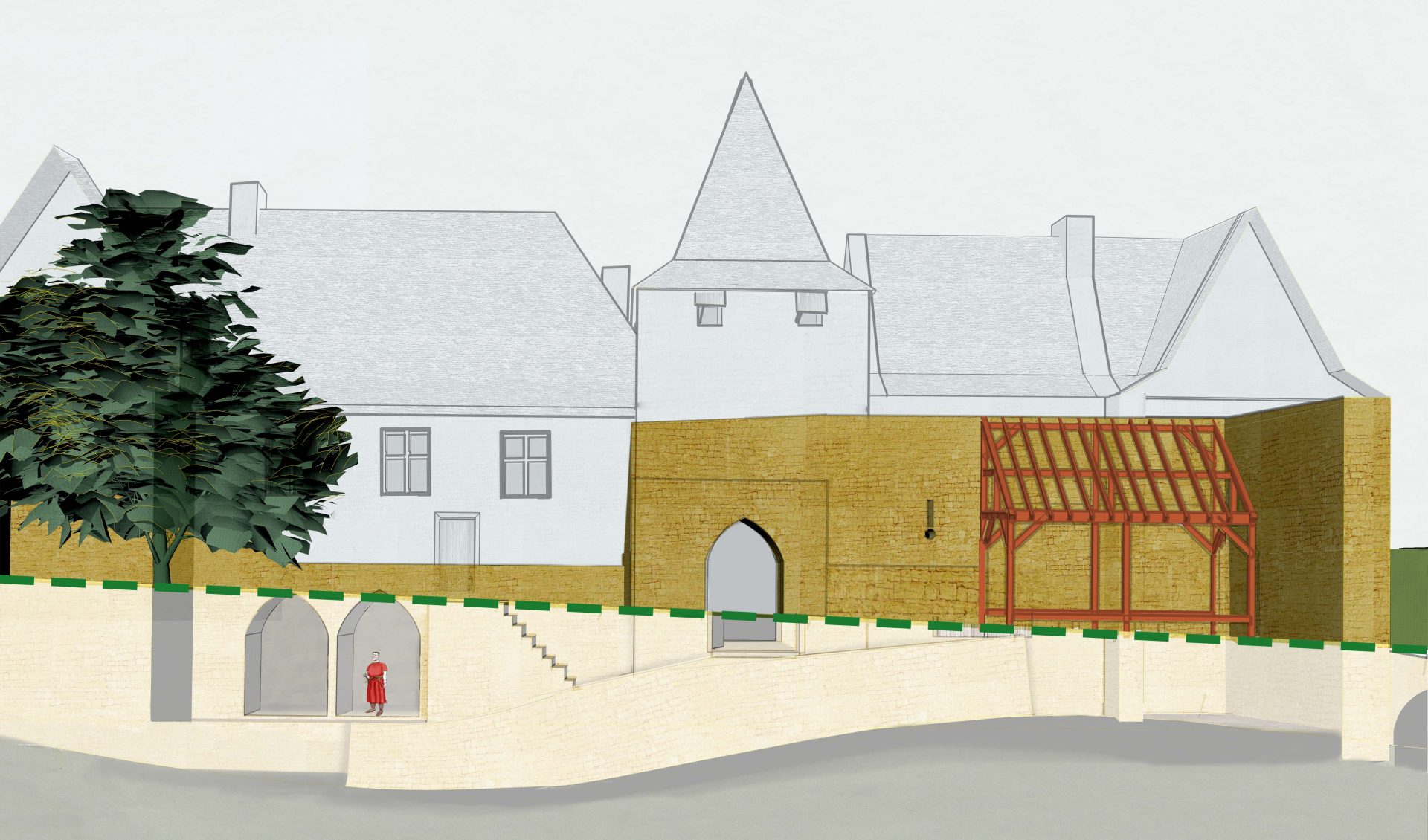
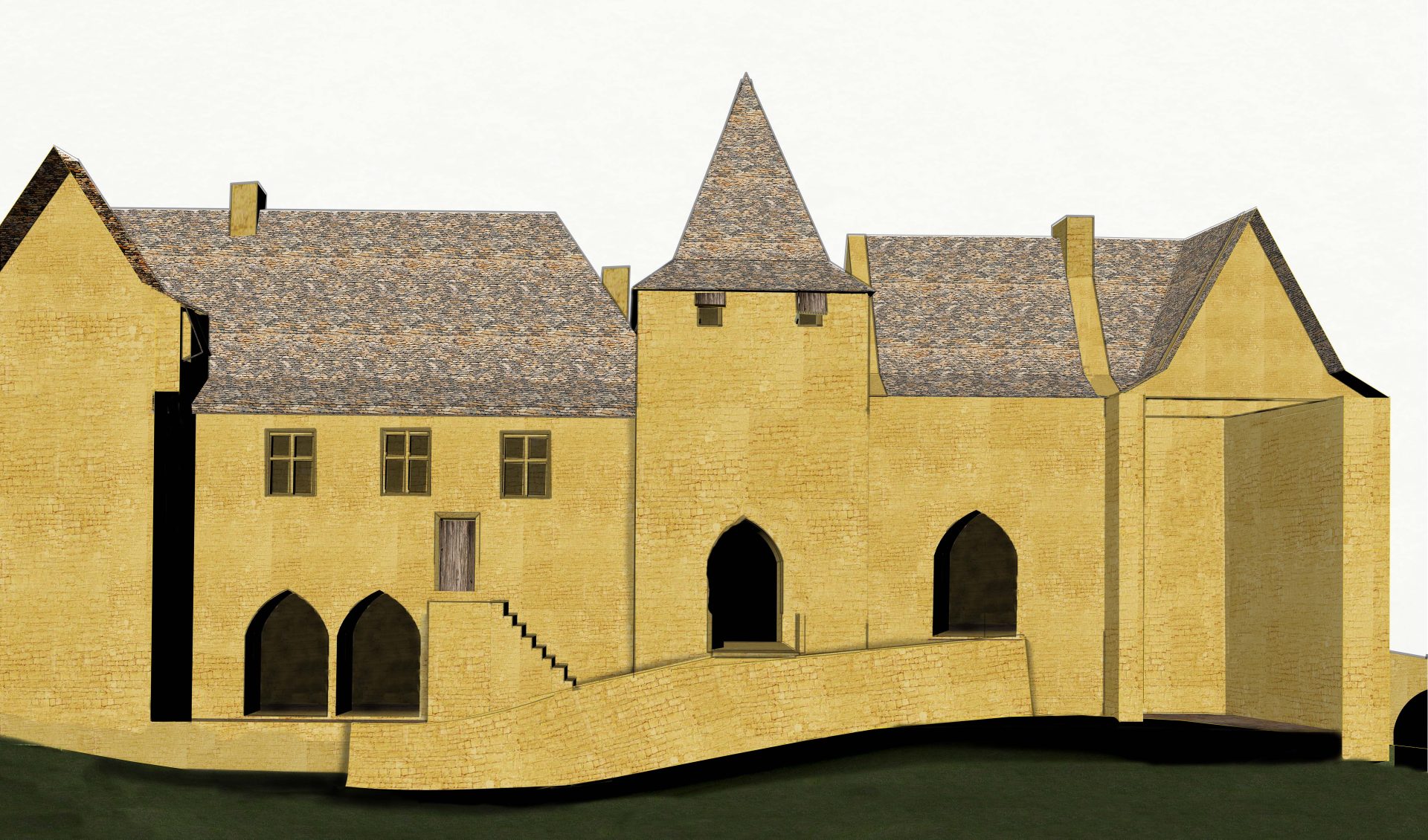
Reconstitution – sectional View of the embankment from the inside of the lower court. Projection of the house of the Audience (aerial parts missing and parts that are currently buried in the fill brought in 1910 )


This construction is one of the 5 logis noble known in the grounds of the castle. They bear the names of hotels of Ferrières, the Brande and the Brown, the lair of la Roque and the Apple tree.
At that time the lord of a manor was not only his castrum. Around him, dens individuals were inhabited by a number of families (more numerous than the speaker was more extensive) responsible for ensuring the guard. Each of them had its sector to defend. These families provided the troops and formed the company of the lord when he went to war for the service of the king or of his overlord. We find ourselves in the same burrow the names of some of these knights Salignac. : the Ferrières, the Verneuil Saint-Geniès, the Cassagne, the Gailhard, the Cromaritz, and many more whom we do not know the names.
In 2006, the house remains completely unknown. In fact, the entire building is filled up to the top of the openings and not showing anything, whether from the inside or from the outside (because of the vegetation). A large crack being present in one of the walls of this area, the work of excavation was undertaken in 2010 in order to relieve the pressure exerted by the backfill.
Approximately 150 tons of embankments have been removed and 300 tonnes remain to be uncovered.
These works led to the update part of a building that has no less than thirteen phases of evolution, from the book of defence at residential area, at the option of periods of conflict, or lull.
Four gunboats, a window, a fireplace, and a pavement have been found in the mounds.



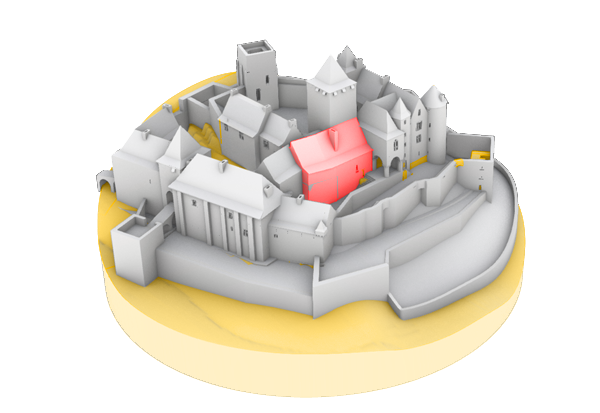


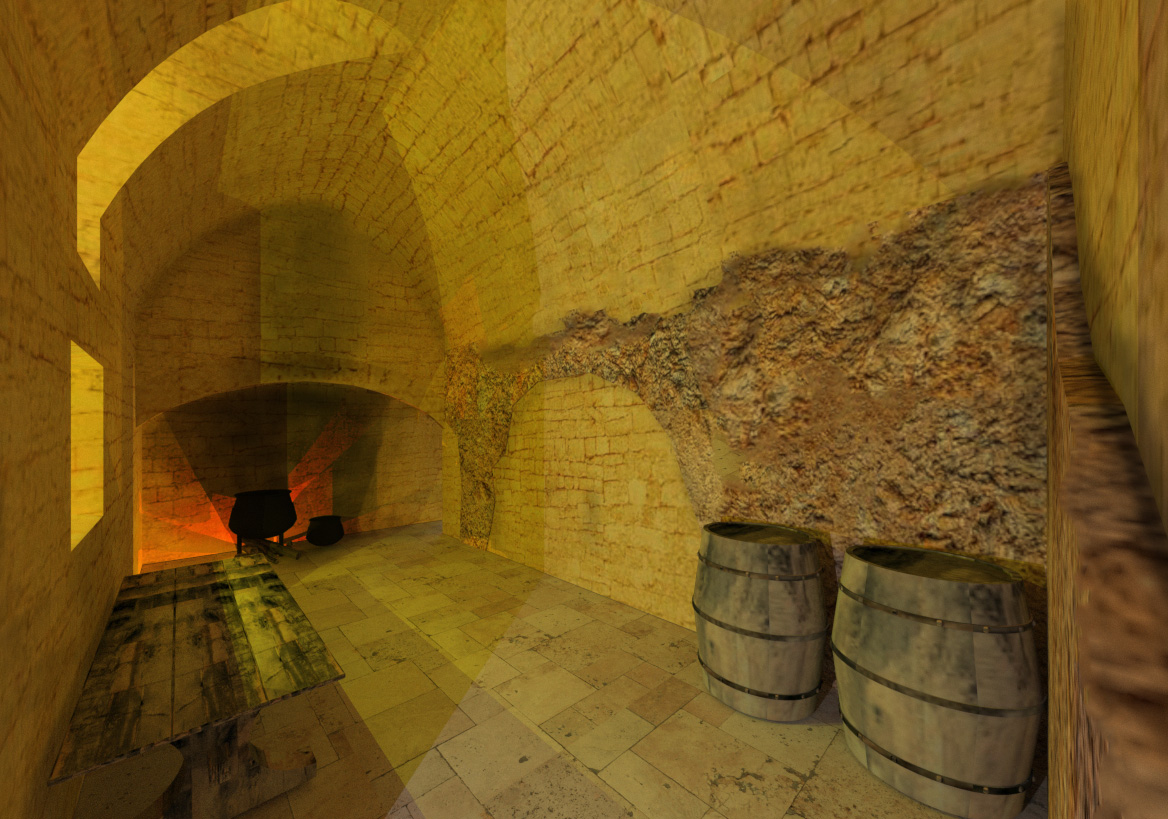
This building housed the old kitchens of the castle. Available immediately to the left of the large porch, they made it possible to serve quickly the main body of the house, while being away. The risk is indeed important. The lights are entrenus continuous or nearly so, and the fire risk is not trivial. The kitchen and away, and arched, greatly limited the risk of spread.
This building housed the old kitchens of the castle. Available immediately to the left of the large porch, they allowed to serve quickly the main body of the house, while being away.
The risk is indeed important. The fires are maintained continuously, or almost, and the fire risk is not trivial. The kitchen and away, and arched, greatly limited the risk of spread of the fire.
They were used in the Eighteenth – Nineteenth century as stables for the horse that had a farmer, and resided in the large front porch (closed and converted). The vault was then still in place.
It collapsed in a time unspecified. The place was in 2006 completely ruined, partially éboulé and filled with vegetation and trees.
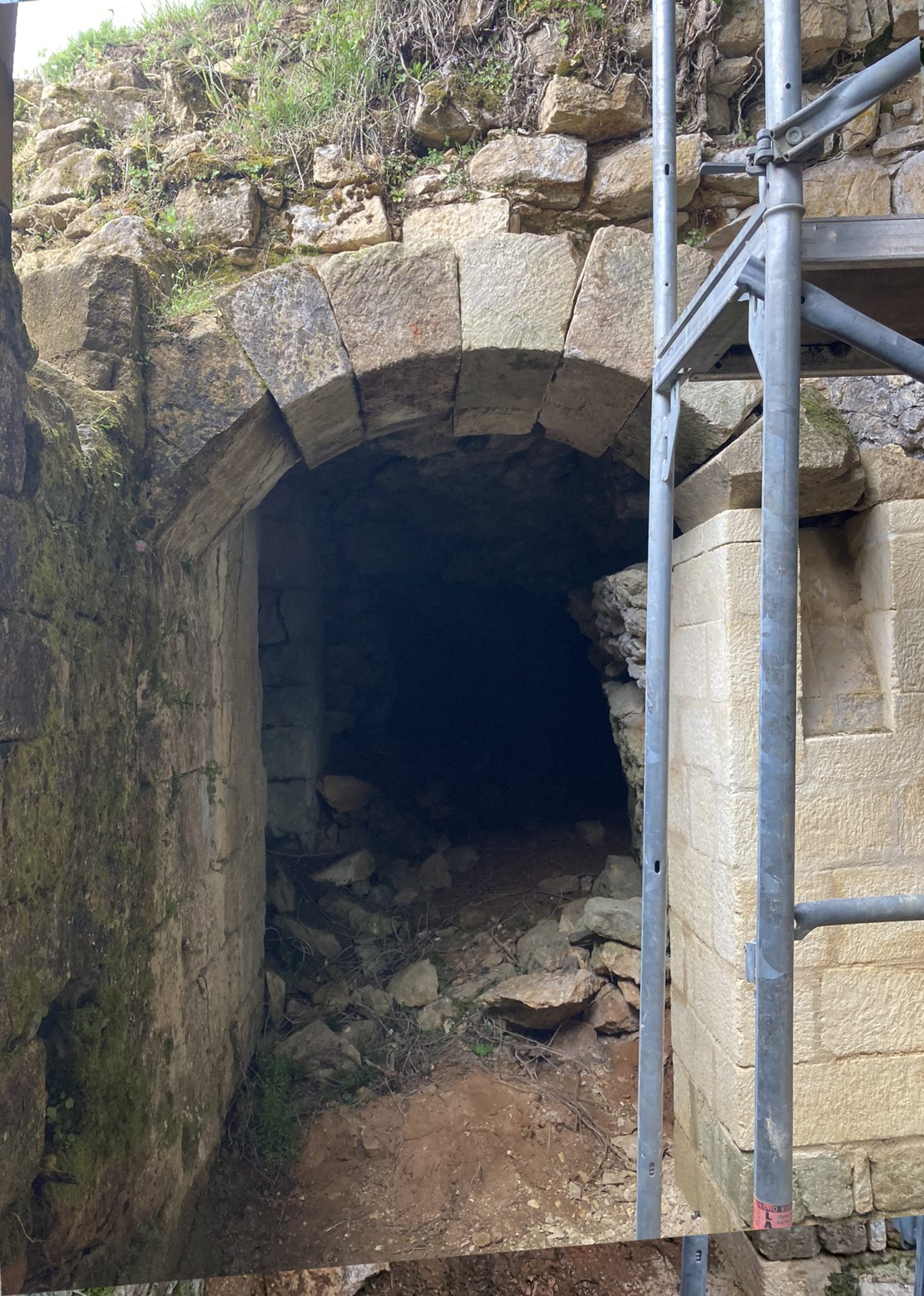
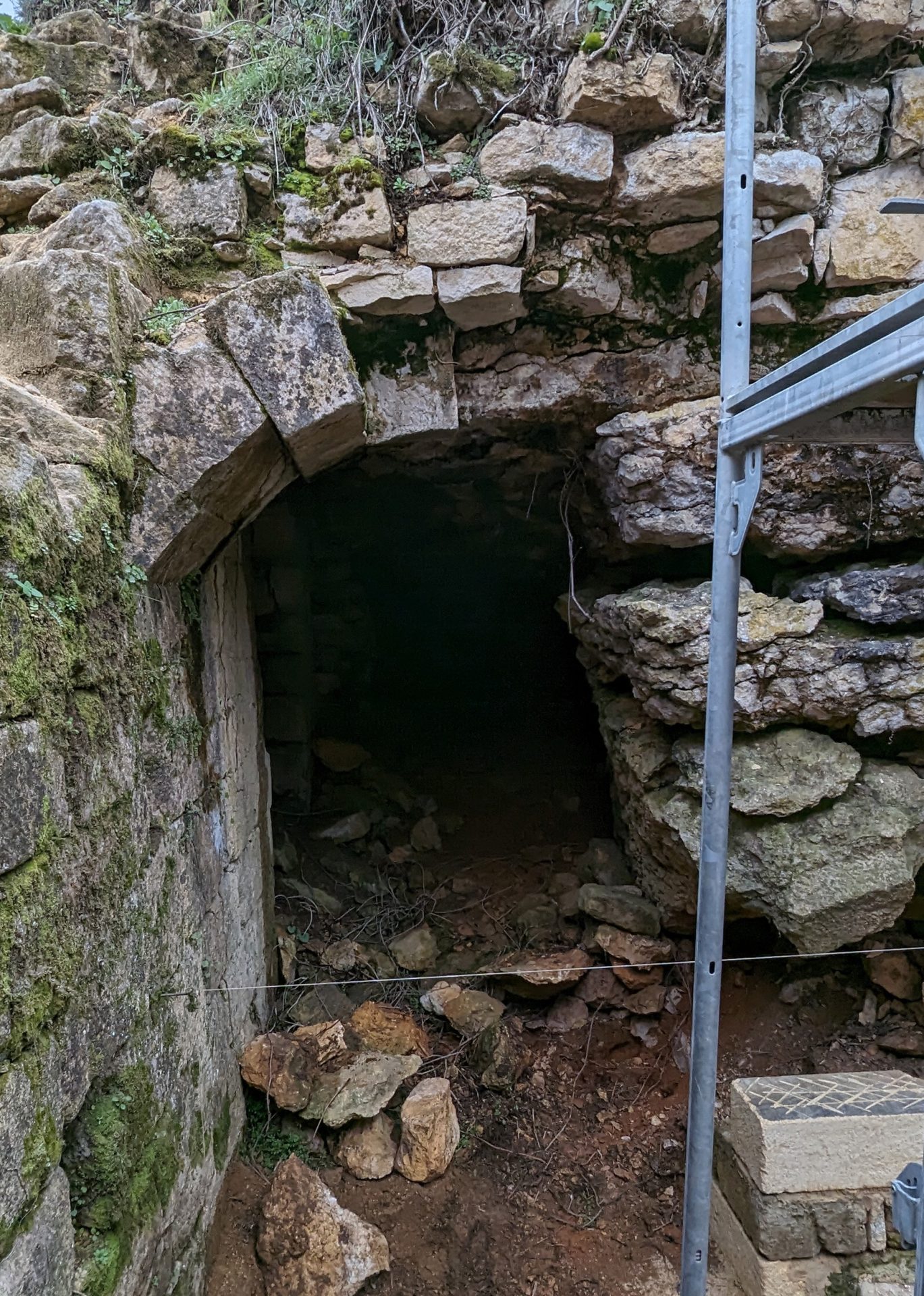


Oldest building of the castle dating back to the Eleventh century, it has lost its top floor. Indeed, during the Nineteenth century, the dungeon had been laid in the house of fortune. The upper floor has been leveled at the level of a vault in order to create a roof with a double slope.
A chimney, opened in the same vault ended up damaging it. Over the years, the vegetation settles and takes root, putting greatly endanger the vault. Fifty acacia trees were cut down and stumps removed. This work has been to turn off the water to the building.
The postern exterior was restored and a door installed.
Finally, the patrol path has been cleared, allowing to recover a part of the pavement and parapets.
Unfortunately, this construction requires still a major work of stabilization due to its advanced state of decay.


This tour finds its foundations in the Thirteenth century, although it has been extensively altered afterwards. It is directly related to the main body of the house. Access to each of its levels, in passing through the main body of the house (except the ground floor).
It was originally a door, open to 3 meters in height permitted to access. The door of the ground floor was not opened until after 1912.
The interior has unfortunately been largely redesigned in the Twentieth century : a grand staircase, a kitchen and a bathroom, were arranged destroying the floor levels, and the original wall paintings.
Significant work has therefore been carried out to re-create the spaces according to their original appearance.


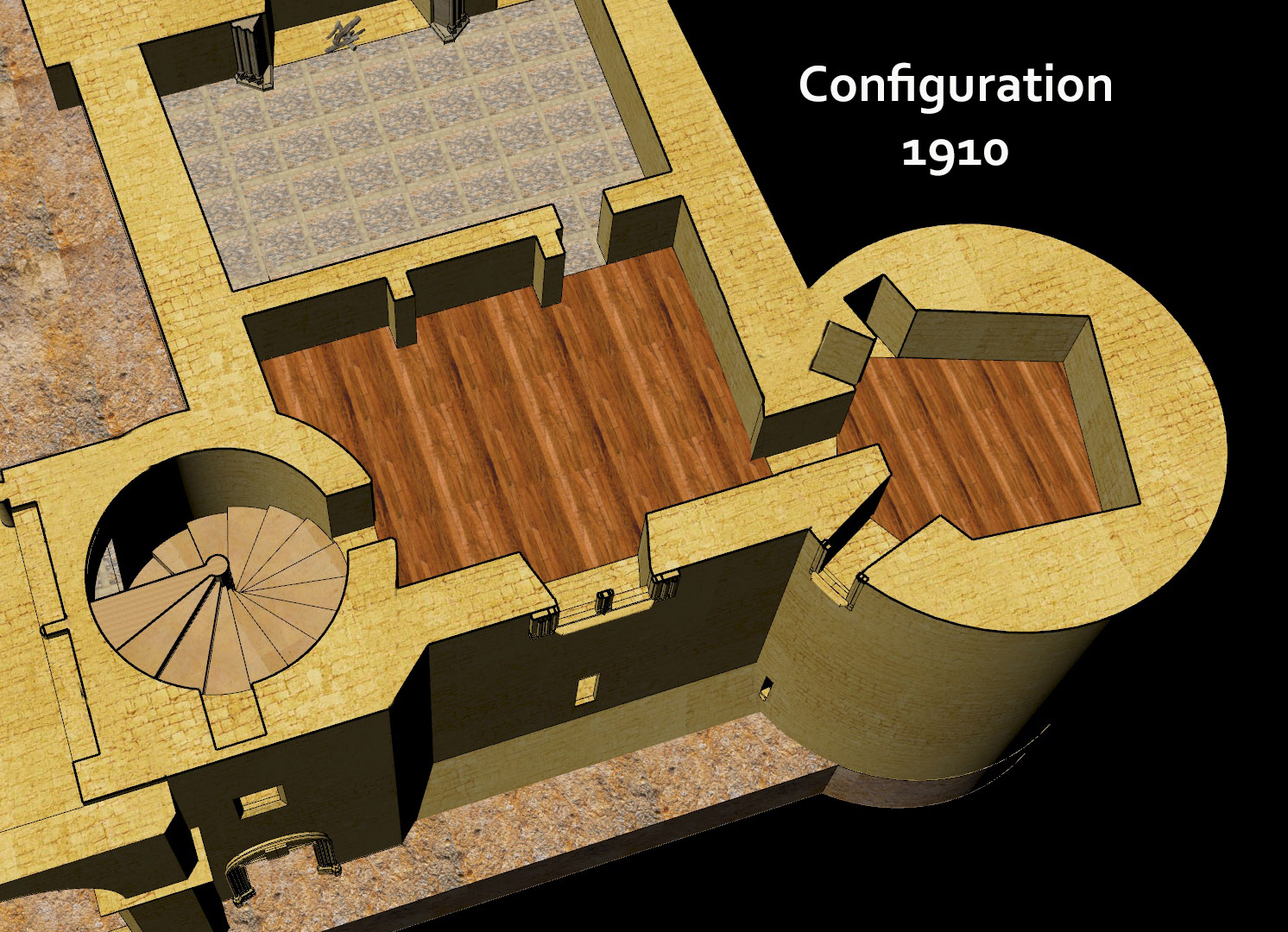
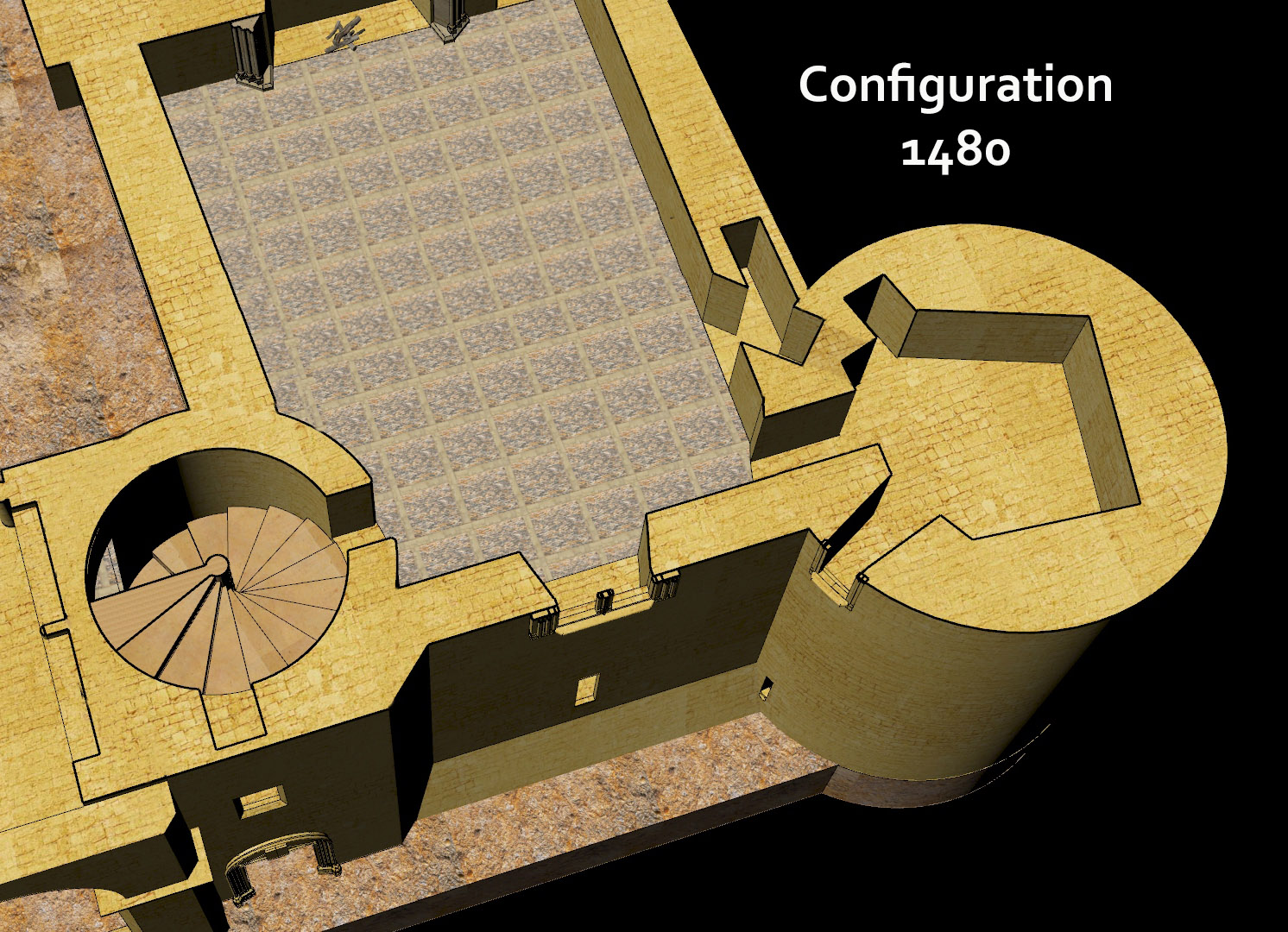
This construction dates from the end of the Fifteenth century and was intended to strengthen the defense of the valley and one of the entrances to the village. The bastion has a staircase serving 7 arrow loops-gunboats.
View before cleaning the bastion
View after cleaning the bastion


La chapelle castrale Saint-Martial was built in the south-east of the house. It remains essentially the bedrock of the choir, forming a sort of porch founded on the terrace a low, whose three sides were open to the origin. The elevation of the lateral wall of the choir has been preserved with its two blind arcades, being incorporated into the wall of the stair tower dating from the last third of the Fifteenth century.
This chapel, which dated from the late Twelfth century or early Thirteenth century. It was located immediately adjacent to the tower of Saint Martial, considered one of the towers master of the castle, and was probably the archives of the castle.
A text from the Seventeenth century described the chapel : "joining that and a little further down there is one of the most beautiful chapels that there ayt between château de Guienne ".
The collapse of the tower of Saint Martial to the end of the Seventeenth won the chapel. It seems never to have been restored by the result.
The changes made in several steps after this mutilation, between the Seventeenth and the Nineteenth century, have preserved the wrenching of the choir of the chapel. In other hand, the remains of the Tower of St Martial and of the chapel have been lowered in order to expand the high courtyard. The freed space leaves space for a terrace of accreditation widely open to the east, offering a clear view of the landscape.


The main body of the house concentrates the main work at the moment.
After a turbulent history, the castle was partially abandoned in 1911. It is home to some of the poor villagers, who prepare the walnuts for export. The keeper of the castle, we described so at this time :
“Yes, the castle is terribly old. The roof lets in the rain, and when it will be collapsed ... the walls may be solid ... what do you want ? The night of a storm, he was afraid... He is afraid to go out... Because the old plane trees, twisted by the wind, bend on the wall that they scrape, loosen the stones ... and the precipitate on the ground ... You think ... to such a height... . The last storm, he had just returned and was put to bed, when he heard the sound of a block that fell in front of his door....”
In 1912, the castle was bought by the Salignac-Fénelon who undertook to restore it to make it a place of resort for their vacation.
The work began quickly to secure the more urgent : the roofs.
The interior is not left out. The great works of the early Twentieth century have greatly damaged the castle with the installation of new floors, electricity and central heating. The interiors are redesigned with great reinforcement of concrete, plaster and fir (to floor joists) to create new living spaces.
At present, only one solution : remove everything and restore the parts according to their original state.


The roofs of the house : first span


The castle is so deeply redesigned : the roof is transformed. The building, originally made up of two bays beyond. Everything has been unified under a single roof, that is adapted as much to the existing one, and culminating in the construction of a structure ill-suited to support a roof slate of nearly 500 tons.
After the takeover in 2006, the most urgent need is therefore undertook the repair of the first span of the roof that is no longer able to bear the burden of slate.
Between 2013 and 2014, the first slice is then discovered, the arases walls redone (they are not their height), and the frame is completely redone. The flagstone is rested temporarily : this is what is called the hérissonnage.

Aspect hérissonné versus finished
The roofs of the house : second bay


2022, bad news. The second bay, even though we haven't finished the first span (always hérissonnée), begins to show signs of weaknesses very pronounced. Elements of the structural break, and the slates are falling, the leaks are countless. The risk of collapse becomes too much and we need to respond immediately for the safety of the home.
The project is estimated at 300 000€ in total for this part :
-1) removing the slate, -~2) completion of the structure, -3) lies of the slate.
Can make a single shot, and with a support of the DRAC limited to 34% of the point -1), we resign ourselves to a pragmatic solution : removing the slate to relieve the frame, and made out of water using the tray steel (color lauze, please !). An evil for a good, the risk went away and the castle is sanitizes. We can look without fear of restoring the parts below.
Everyone rest assured, we plan to surrender the slate. Unfortunately we were too critical of people who, not having visited the castle, will allow you to judge without knowing or the ins or the outs (not our goal).

This is not what is most lovely, but this is temporary and this part of the castle is now saved.
The arms room

The room weapon almost complete. We still need to reconstruct the massive fireplace in the Fifteenth century.
This room was the first to be the subject of a restoration work. At the time of our arrival in 2006, the room is located in the same configuration and the same status as the other parts of the castle : floor 19th floor, plaster on all walls, with a drawing of faux stone, bacula (or lattice) to the ceiling with formwork at the level of the beams (to make them more “mass aspect) and painting wood effect on these forms.
The set is in very poor condition due to lack of maintenance and especially the seepage of water from roofs (so 3 floors up).


Once the realization of the ceiling of the room of weapons, it was possible to get down to the room just above, restored and furnished as a house (or apartment) in the Fifteenth century.
Unlike the weapons room, this piece has retained its original fireplace of the Fifteenth century. The walls have not been coated at the beginning of the Twentieth century, but of the cement joints in relief have been made. They will be removed in a future project. The ceiling, meanwhile, had its bacula (wooden lathing plaster), which has been removed. The ceiling will be remade in the rules of the future rehabilitation of the structure.

The room with its design typical of the Fifteenth century, inspired by illuminations medieval.
The room works

This room had been divided into two rooms and a corridor. The fireplace was walled up and the stairs allowing access to the attic was in front of it. The ground has also been noted, and is about thirty inches above the level of origin.
An important work has been done to rehabilitate the spaces and find the volumes of the origins.


This room is located immediately behind the majestic façade attributed to Antoine de Salignac, seneschal of Périgord, and built around 1480.
At this time, it is very different from what we can see today. In fact, late Nineteenth – early Twentieth, the room is split in two and a chimney “recovery” of the late Sixteenth and Seventeenth is added on the newly constructed wall.